Mediterranean Grain Bowl
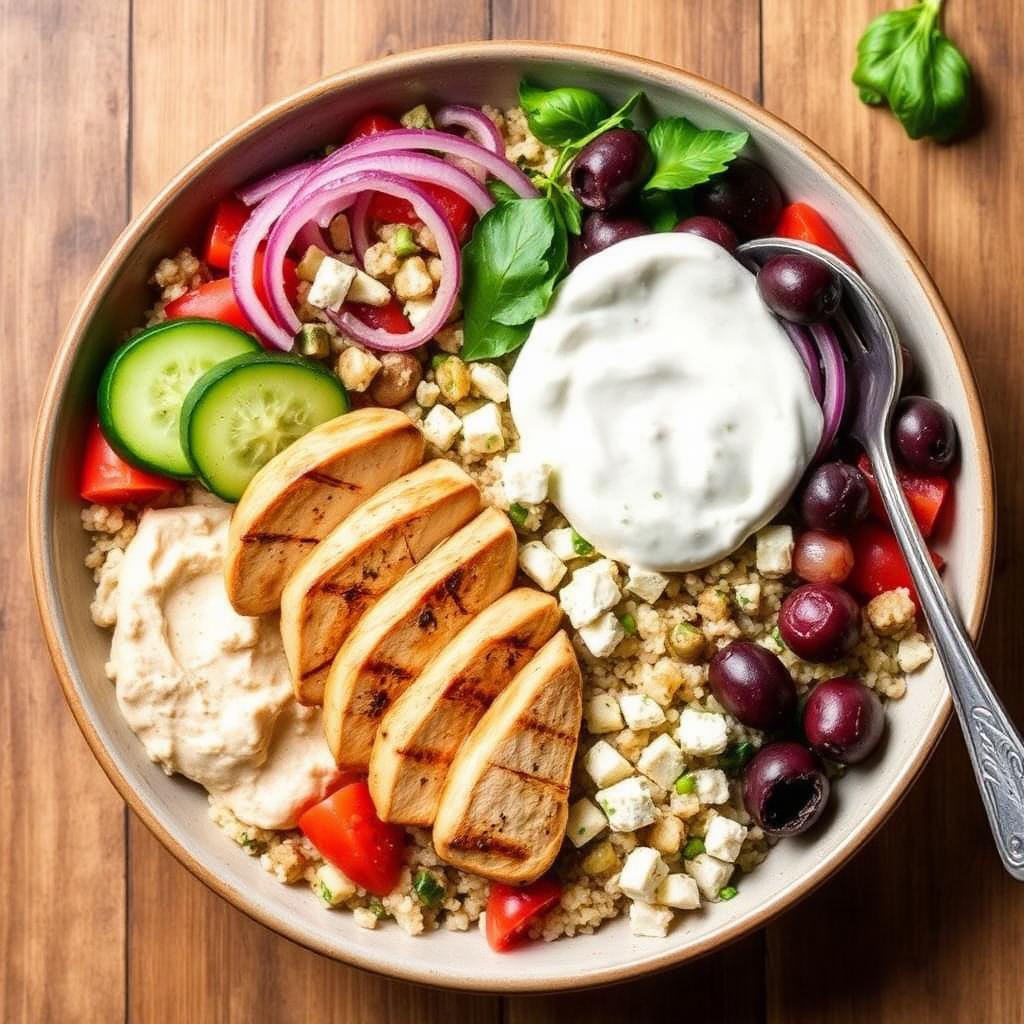
This Mediterranean grain bowl recipe is a vibrant, protein-packed lunch layered with fluffy couscous, grilled lemon-herb chicken, cucumber, tomato, kalamata olives, feta, hummus, and creamy tzatziki. Ready in 30 minutes, this healthy Mediterranean bowl brings all the flavors of a Greek gyro shop to your lunch prep container.
Prep
15 min
Cook
15 min
Total
30 min
Servings
4
Calories
520
Why This Mediterranean Grain Bowl Works
A satisfying grain bowl needs more than a collection of good ingredients; it needs contrast in every forkful. Here, warm pearl couscous and freshly seared chicken form a hearty base, while cucumber, cherry tomatoes, red onion, olives, and herbs bring crunch, acidity, and freshness. Feta adds salty richness, and the hummus and tzatziki act as two complementary sauces rather than heavy dressings.
The quick lemon-herb marinade does double duty. Lemon juice, garlic, oregano, smoked paprika, and olive oil season the chicken all the way around while helping its exterior brown in a hot pan. Cubing the chicken creates plenty of edges that can make direct contact with the skillet, so you get flavorful char in only 6 to 7 minutes instead of waiting for whole breasts to cook.
Pearl couscous is especially effective here because its chewy, rounded grains hold their shape beneath juicy vegetables and creamy toppings. Tossing it with the remaining olive oil after cooking keeps the grains loose and gives the bowl a cohesive savory finish. The couscous should be fluffy and separate, not wet or tightly packed.
Across eight test batches, we found that component placement matters nearly as much as seasoning. Keeping the hummus and tzatziki in distinct scoops preserves their individual flavors, while arranging the vegetables in clusters prevents the warm grain from immediately softening everything. The finished bowl feels abundant and colorful, yet the entire recipe still fits into a 30-minute lunch window.
Why You'll Love This Recipe
- It delivers 42 grams of protein per serving, making it a substantial lunch rather than a bowl that leaves you hungry an hour later.
- The full recipe takes 30 minutes, including the brief 10-minute chicken marinade.
- Warm, cool, crisp, chewy, briny, and creamy elements create restaurant-style contrast with straightforward supermarket ingredients.
- Each person can adjust the balance of hummus, tzatziki, vegetables, feta, and olives in their own bowl.
- The components pack well for workday lunches when the cool toppings are stored separately from the chicken and couscous.
- Pearl couscous can be replaced with the listed quinoa option without changing the Mediterranean character of the bowl.
- The vibrant presentation makes it equally useful for casual entertaining, family lunches, and practical meal prep.
Ingredient Notes
Chicken breast
Boneless, skinless chicken breast cooks quickly and supplies the bowl's primary protein. Cut it into evenly sized cubes so all the pieces finish together. Pat particularly wet chicken dry before marinating; excess surface moisture dilutes the seasonings and encourages steaming rather than browning.
Lemon, garlic, and dried seasonings
Lemon juice brightens the chicken, while minced garlic, dried oregano, and smoked paprika build its savory, gently smoky profile. The 10-minute marinating period is enough for small chicken cubes. Stir thoroughly so the garlic and spices do not remain concentrated on only a few pieces.
Olive oil
The divided olive oil supports both browning and texture. Most goes into the marinade to coat the chicken, while the remainder is tossed through the cooked couscous. That final addition is small but important because it keeps the grains from clumping as they stand.
Pearl couscous
Pearl couscous is pasta shaped into small spheres, giving it a pleasantly springy bite. Cook it according to its package directions in salted water, since liquid ratios and cooking times vary among brands. Drain if the package directs, then fluff and add the reserved oil while it is still warm. Quinoa is the specified alternative.
Cucumber, tomatoes, and red onion
English cucumber has thin skin and relatively few seeds, making it ideal for raw bowls. Halved cherry tomatoes provide juicy sweetness without requiring peeling or seeding. Slice the red onion thinly so its sharpness accents the other ingredients instead of overwhelming them.
Olives and feta
Kalamata olives contribute concentrated briny flavor, and halving them distributes that flavor more evenly. Crumbled feta gives the bowl salty, tangy richness. Because both ingredients are naturally assertive, taste the assembled bowl before adding any final salt.
Hummus, tzatziki, and herbs
Hummus adds body and earthy chickpea flavor, while tzatziki supplies cool, creamy acidity. Use both as separate toppings so diners can drag bites through either one. Fresh parsley tastes grassy and clean; mint creates a cooler, more aromatic finish.
Ingredients
- 1 lb boneless skinless chicken breast, cubed
- 3 tbsp olive oil, divided
- 2 tbsp lemon juice
- 2 garlic cloves, minced
- 1 tsp dried oregano
- 1 tsp smoked paprika
- 1 1/2 cups pearl couscous (or quinoa)
- 1 English cucumber, diced
- 1 pint cherry tomatoes, halved
- 1/2 red onion, thinly sliced
- 1/2 cup kalamata olives, halved
- 1/2 cup crumbled feta
- 1/2 cup hummus
- 1/2 cup tzatziki
- Fresh parsley or mint, for garnish
- Salt and pepper, to taste
Instructions
- 1
Toss the chicken with 2 tbsp olive oil, lemon juice, garlic, oregano, smoked paprika, salt, and pepper. Marinate 10 minutes.
- 2
Cook the pearl couscous according to package directions in salted water. Fluff and toss with the remaining olive oil.
- 3
Heat a grill pan or large skillet over medium-high heat. Sear the chicken 6 to 7 minutes total until charred and cooked through.
- 4
Divide the couscous among 4 bowls.
- 5
Top each with grilled chicken, cucumber, tomatoes, red onion, olives, and feta.
- 6
Add a scoop of hummus and a dollop of tzatziki to each bowl. Sprinkle with parsley and serve.
Substitutions and Swaps
For a gluten-free bowl, use quinoa and verify that the hummus, tzatziki, spices, and other packaged ingredients are labeled appropriately for your needs. If you enjoy the quinoa format, Mediterranean Quinoa Power Bowl is another useful lunch option with a similar fresh, layered spirit.
| Original ingredient | Suggested swap | What to expect |
|---|---|---|
| Pearl couscous | Quinoa | A smaller, fluffier grain with a nuttier flavor and naturally gluten-free composition; cook according to package directions. |
| Chicken breast | Boneless skinless chicken thighs | A richer result that may need additional cooking depending on cube size; cook until safely done. |
| English cucumber | Persian cucumbers | Similar crunch and thin skin with very little preparation beyond dicing. |
| Cherry tomatoes | Grape tomatoes | A slightly firmer, less juicy bite that still holds well in packed lunches. |
| Fresh parsley | Fresh mint | A cooler, more aromatic garnish that pairs especially well with tzatziki. |
| Kalamata olives | Another brined olive | A different salt and acidity profile; taste before adding extra seasoning. |
Variations to Try
Extra-herby bowl
Use both parsley and mint as the garnish rather than choosing one. Scatter the herbs at the last moment so they stay fragrant and bright instead of wilting against the hot chicken.
Warm vegetable side variation
Serve the bowl with Crispy Air Fryer Brussels Sprouts when you want more roasted flavor and a substantial dinner presentation. Air Fryer Asparagus with Lemon Parmesan also echoes the lemon and cheese notes without changing the bowl itself.
Seafood-inspired menu
Keep the grain bowl as written for some guests and offer Lemon Herb Air Fryer Tilapia as a separate centerpiece for others. Its citrus and herb profile belongs naturally on the same table without requiring a new set of side dishes.
Lower-carb accompaniment
If you want to serve smaller portions of the grain bowl as part of a broader spread, Zucchini Noodles with Pesto adds a vegetable-forward dish with fresh herbal flavor. It is best served separately so the pesto does not obscure the hummus and tzatziki.
Pro Tips from the Test Kitchen
Preheat the grill pan or skillet fully over medium-high heat before adding the chicken. You should hear a clear, immediate sizzle. Arrange the cubes in a single layer with breathing room between them; crowding traps steam and leaves the exterior pale. If your pan is small, cook in batches rather than forcing every piece in at once.
Leave the chicken undisturbed long enough to develop color before turning it. Constant stirring interrupts contact with the pan. The finished cubes should show browned or lightly charred patches, look opaque through the center, and reach a safe internal temperature of 165°F. Because the pieces are small, check promptly near the end of the stated 6 to 7 minutes.
Prepare the vegetables while the chicken marinates and the couscous cooks. This overlap is what keeps the total time at 30 minutes. Use separate cutting surfaces or thoroughly wash the board and knife after handling raw poultry. For the cleanest bowls, let the couscous stop steaming heavily before arranging raw cucumber and herbs beside it.
In side-by-side testing, salting in layers gave better results than adding a large amount at the end. Salt the couscous water, season the chicken marinade, then assess the assembled bowl after adding feta, olives, hummus, and tzatziki. Those toppings vary noticeably in salinity by brand.
Baker's Tip
For defined, meal-prep-friendly layers, spread the cooked couscous briefly on a wide plate so excess steam can escape. It should remain warm and supple, but it should not release enough heat to make the cucumber limp or the tzatziki watery.
Common Mistakes to Avoid
- Cutting the chicken into uneven pieces. Small cubes can overcook before larger ones become safe, leaving a mix of dry and underdone meat.
- Adding wet chicken to a barely warm pan. The marinade should coat the meat, but pooled liquid and insufficient heat inhibit browning.
- Crowding the skillet. A packed pan drops in temperature and creates steam, so the chicken cooks through without developing flavorful char.
- Overcooking pearl couscous. It should be tender with a light chew, not swollen and mushy. Follow the package directions and check near the end.
- Skipping salt in the couscous water. Seasoning only the surface later cannot give the grain the same well-rounded flavor.
- Placing tzatziki directly onto piping-hot couscous. Excess heat can loosen the sauce and warm the cucumber in it.
- Adding extra salt before tasting the feta and olives. Their brininess may already provide all the finishing seasoning the bowl needs.
Troubleshooting
| Problem | Cause | Fix |
|---|---|---|
| Chicken is pale instead of charred | The pan was not hot enough, the pieces were crowded, or too much marinade liquid entered the skillet. | Preheat the pan thoroughly, let excess liquid drip away, and cook the chicken in a single uncrowded layer. |
| Chicken is dry | The cubes were cut too small or cooked beyond doneness. | Use even cubes and begin checking before the end of the cooking window; remove them once they reach 165°F. |
| Couscous is clumped | It stood without being fluffed or oiled. | Fluff it promptly and toss with the reserved olive oil while warm, separating compacted grains gently. |
| Bowl tastes too salty | The feta, olives, hummus, tzatziki, and seasoned chicken contributed more salt than anticipated. | Avoid additional salt and distribute the salty toppings with more couscous, cucumber, and tomatoes in each bite. |
| Vegetables become watery | They were cut too far ahead, stored with salt, or sealed while warm. | Keep vegetables cool and unsalted, and allow warm components to release steam before packing. |
| Tzatziki turns thin | It was placed on very hot ingredients or mixed with tomato juices during storage. | Keep it in a separate container and add it after reheating the chicken and couscous. |
How to Store and Reheat
For best texture, refrigerate the cooked chicken and couscous separately from the cucumber, tomatoes, onion, olives, feta, herbs, hummus, and tzatziki. Airtight containers limit drying and prevent the onion from scenting every other component. Cool cooked food promptly rather than leaving packed bowls at room temperature.
Cooked chicken and couscous can generally be refrigerated for up to 4 days when handled safely. The chopped vegetables are at their best earlier, especially once tomatoes are cut. Hummus and tzatziki should follow any storage guidance and use-by dates on their original packaging.
Reheat only the chicken and couscous. Microwave them in short intervals until the chicken is steaming and reaches 165°F, stirring between intervals for even heating. If the couscous seems firm from refrigeration, cover it while warming so trapped steam relaxes the grains. Add all cold vegetables, feta, olives, sauces, and herbs after reheating.
Make-Ahead and Meal Prep
The most efficient prep strategy is to cook the couscous and chicken together while chopping the vegetables. Once the cooked components have cooled enough to stop producing heavy steam, portion them into four containers. Use small lidded cups for hummus and tzatziki, and keep chopped herbs dry in a separate compartment or container.
If assembling complete cold bowls, place couscous on the bottom, then arrange chicken, olives, and feta around it. Keep cucumber and tomatoes toward the top, away from residual warmth. Red onion can be packed with the raw vegetables, but storing it separately produces a milder-smelling lunch container.
For the freshest results, leave the tomatoes whole until the evening before or morning of serving, then halve them. The chicken can marinate only for the instructed 10 minutes while you complete other tasks; there is no need to extend that brief step to make meal prep effective. If you want another packable option in the same weekly rotation, Easy Pasta Salad offers a useful chilled counterpart.
What to Serve With It
This Mediterranean grain bowl is designed as a complete lunch, so it does not require a side. For a larger dinner, add a simple platter of extra cucumber, tomatoes, olives, and herbs so guests can refresh their bowls without introducing competing flavors.
A soup-and-bowl spread works particularly well in cooler weather. Creamy Tomato Basil Soup brings gentle sweetness and acidity that complement the oregano, feta, and garlic. Serve modest portions because the grain bowl already provides chicken, couscous, vegetables, and two creamy toppings.
For a mixed lunch table, Easy Pasta Salad can be served alongside the bowl as a familiar crowd-friendly option. Keep the dishes distinct rather than stirring them together; the grain bowl's hummus and tzatziki are intended to coat individual bites, not function as dressing for an additional salad.
Nutrition and Dietary Notes
Each of the four servings contains 520 calories, 42 grams of protein, 50 grams of carbohydrates, 22 grams of fat, 6 grams of fiber, 6 grams of sugar, and 760 milligrams of sodium. The protein comes primarily from chicken, with additional contributions from couscous, hummus, feta, and tzatziki. The grain, vegetables, and hummus collectively supply the fiber.
This is a high-protein meal, but it is not vegetarian, vegan, dairy-free, or gluten-free as written. Feta and tzatziki contain dairy, while pearl couscous is wheat-based. Using the listed quinoa option can remove the wheat-based grain, but anyone with celiac disease or a serious allergy should also verify every packaged ingredient and avoid cross-contact.
Sodium can vary significantly among feta, olives, hummus, tzatziki, and the amount of salt used in cooking. People monitoring sodium should compare product labels and season conservatively, though the stated nutrition reflects the supplied recipe. Portion all four bowls evenly if you want each serving to align as closely as possible with the listed nutrition.
Nutrition Facts
Per serving · 520 calories
protein
42g
carbs
50g
fat
22g
fiber
6g
sugar
6g
sodium
760mg
Related Recipes
More lunch and similar dishes you'll love.
Healthy Grain Bowl
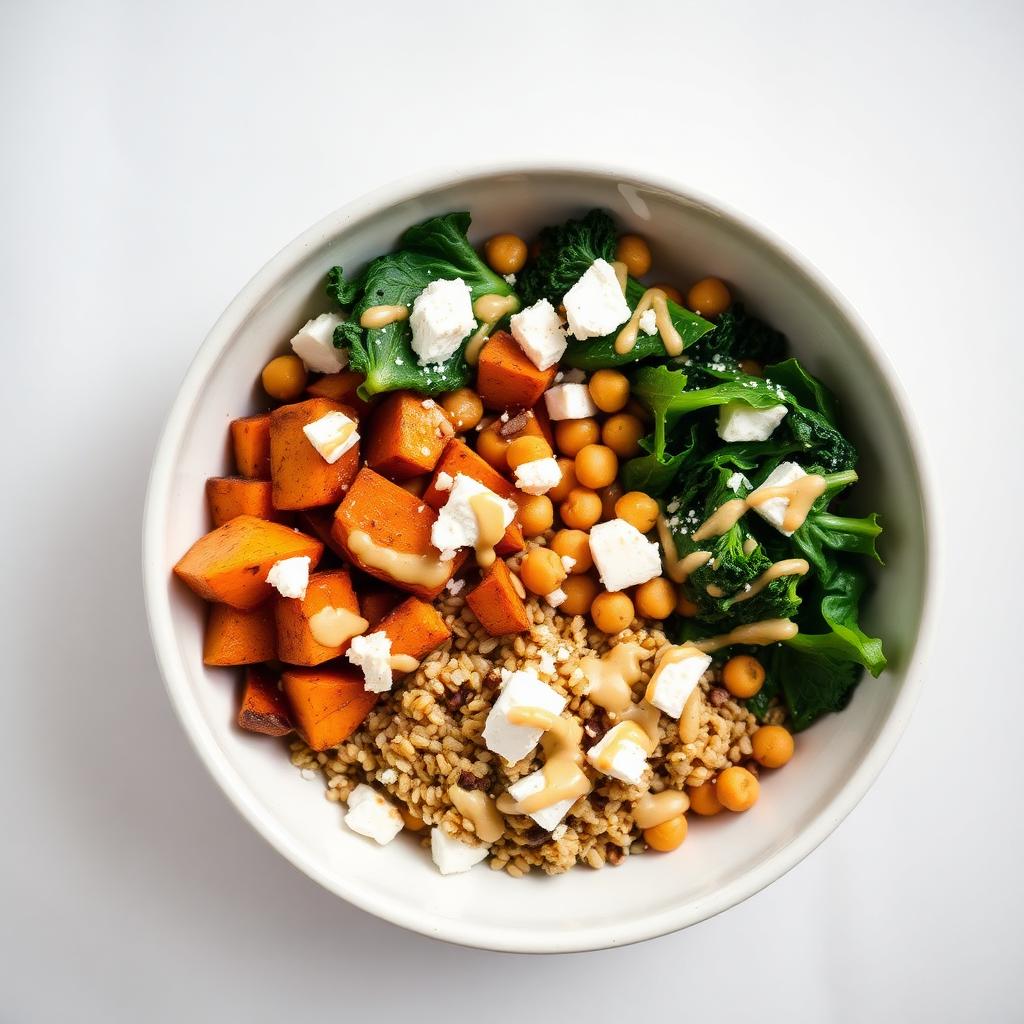
This healthy grain bowl recipe layers nutty farro, roasted sweet potato, garlicky kale, crispy chickpeas, and creamy tahini dressing for a hearty vegetarian lunch. Ready in 35 minutes, this nutrient-dense healthy grain bowl is packed with fiber, plant protein, and Mediterranean flavor — an easy meal prep bowl that keeps beautifully.
Mediterranean Quinoa Power Bowl
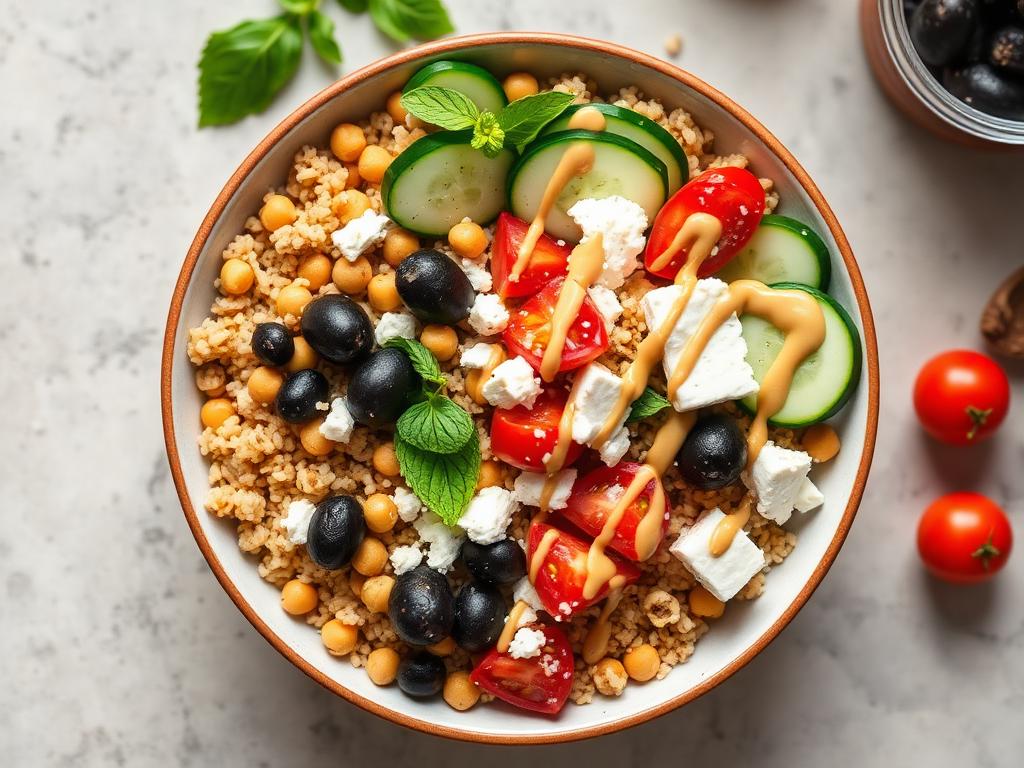
This vibrant Quinoa Power Bowl is loaded with Mediterranean flavors like chickpeas, feta, and fresh cucumber. Drizzled with lemon-tahini dressing, it is a healthy grain bowl that keeps you full all day.
Classic Chicken Soup
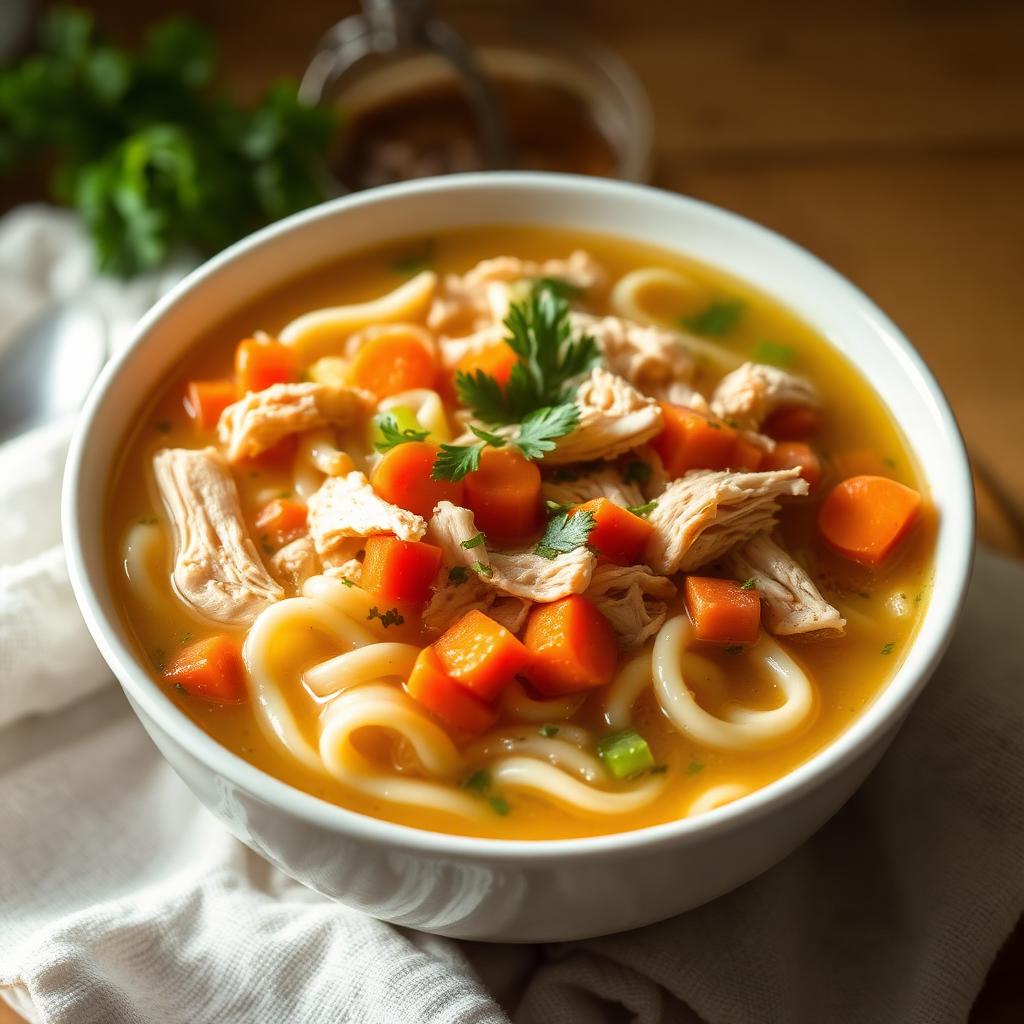
This classic chicken soup recipe is the ultimate homemade chicken noodle soup — cozy, restorative, and ready in under an hour. Made with tender shredded chicken, egg noodles, carrots, celery, and fresh herbs in a golden broth, this old-fashioned chicken soup is the go-to comfort food for cold days and sick days alike.
Easy Pasta Salad
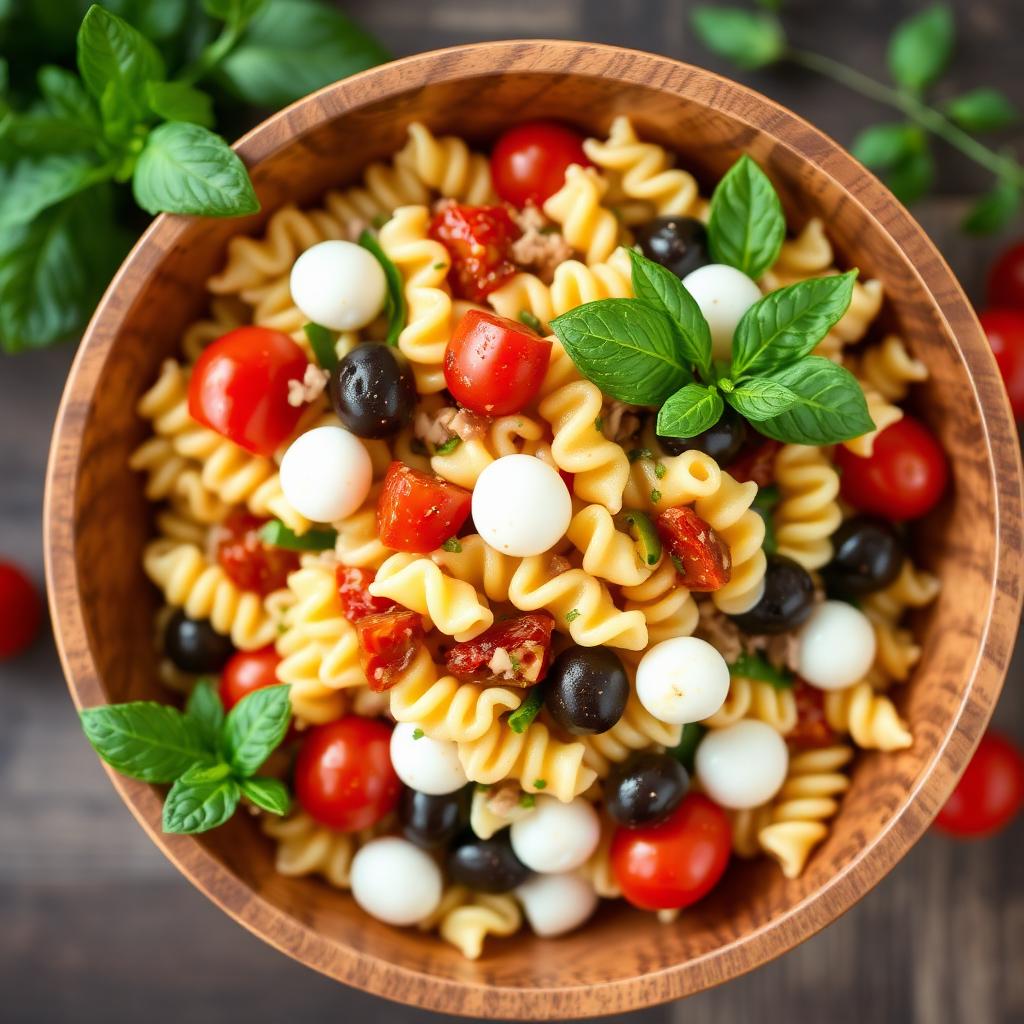
This easy pasta salad recipe is the ultimate potluck side dish, tossed with crisp veggies, mozzarella pearls, olives, and a tangy Italian dressing. Ready in 20 minutes, this cold pasta salad is perfect for BBQs, meal prep lunches, and summer picnics — a classic American pasta salad the whole family loves.
Chicken Pasta Salad
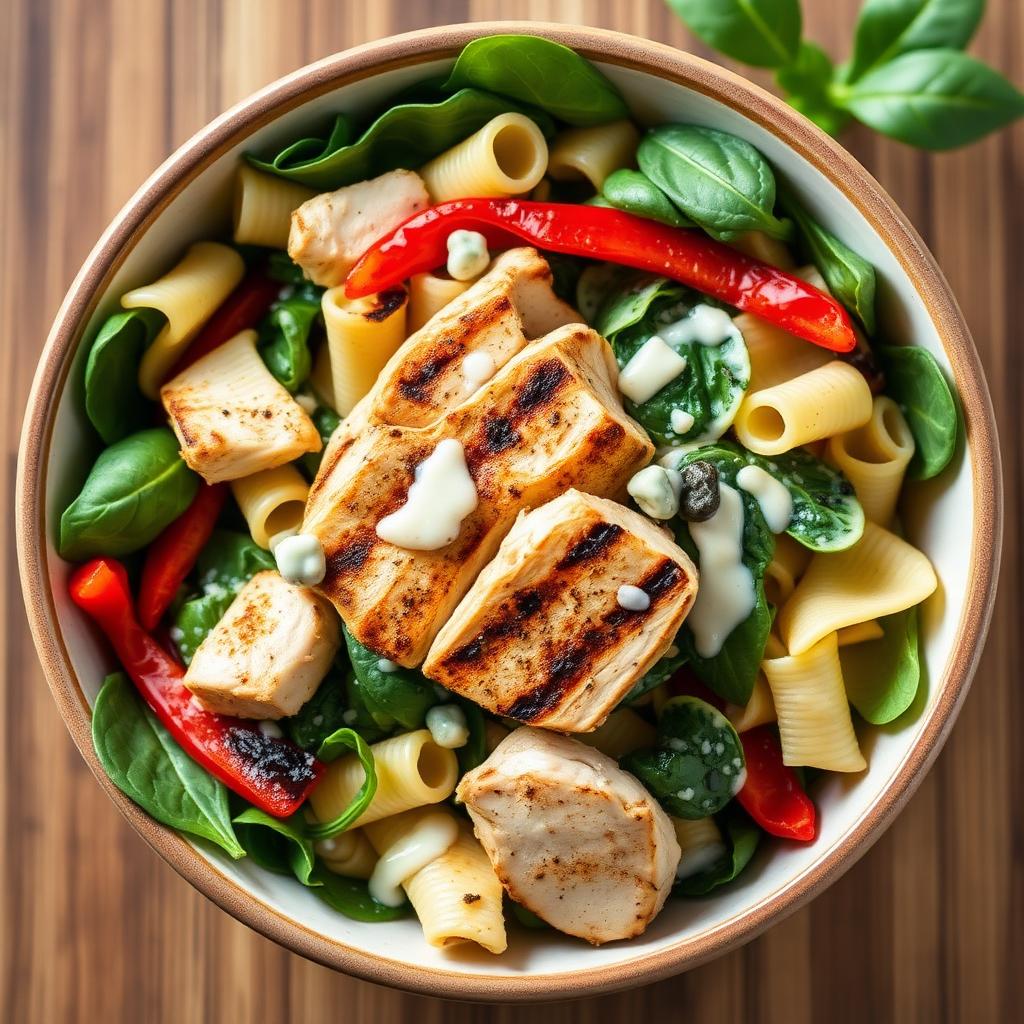
This chicken pasta salad recipe is a hearty, protein-packed lunch that comes together in under 30 minutes. Loaded with grilled chicken, tender bowtie pasta, baby spinach, roasted red peppers, and a creamy Greek yogurt Caesar dressing, it is the perfect make-ahead pasta salad with chicken for weekday lunches, potlucks, and meal prep bowls.
Italian Pasta Salad
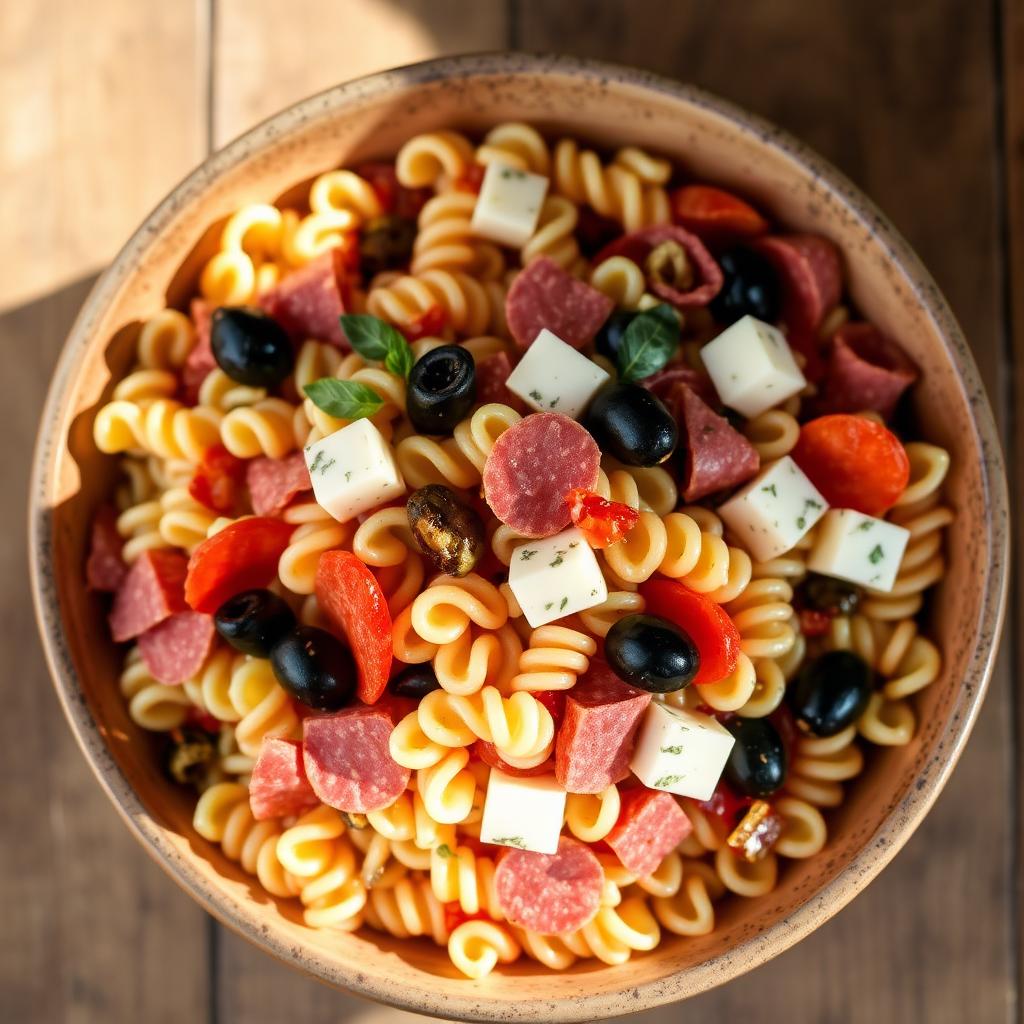
This authentic Italian pasta salad recipe is the ultimate summer side dish, packed with tri-color rotini, salami, pepperoni, provolone, olives, and pepperoncini in a zesty homemade Italian dressing. Perfect for backyard BBQs, potlucks, and easy lunches, this cold Italian pasta salad only gets better as it sits in the fridge.
Frequently Asked Questions
What grains work best in a Mediterranean grain bowl?+
Pearl couscous, quinoa, farro, and bulgur are all traditional Mediterranean grains that hold up well with tzatziki and hummus. Brown rice or orzo work in a pinch for a Mediterranean bowl base.
Can I make a Mediterranean grain bowl vegetarian?+
Yes — swap the grilled chicken for crispy chickpeas, marinated tofu, or falafel to keep this Mediterranean grain bowl vegetarian while still hitting 20+ grams of plant protein.
How do I meal prep Mediterranean grain bowls?+
Cook the couscous and chicken up to 4 days ahead. Store hummus, tzatziki, and cucumber separately, then assemble bowls fresh. This is one of the best meal prep lunch bowl formats.
What dressing goes on a Mediterranean bowl?+
The hummus and tzatziki act as creamy dressings, but a drizzle of lemon-oregano vinaigrette (olive oil, lemon, garlic, oregano) ties everything together beautifully. See our healthy grain bowl for a tahini-based alternative.
Can I cook the chicken without a grill pan?+
Yes. A large, heavy skillet works well and may be easier to fit into a weeknight routine. Preheat it over medium-high heat until the chicken sizzles as soon as it touches the surface. Add the cubes in a single layer and avoid pouring excess marinade liquid into the pan. Cook for the instructed 6 to 7 minutes total, turning as needed, until browned, opaque in the center, and safely cooked to 165°F.
Should a Mediterranean grain bowl be served warm or cold?+
This bowl is excellent with warm chicken and couscous alongside cool vegetables, hummus, and tzatziki because the temperature contrast makes it especially satisfying. It can also be eaten chilled for meal prep. If serving it cold, allow the cooked components to cool promptly before refrigeration. If serving it warm, avoid placing the tzatziki on steaming-hot couscous, as the heat can thin the sauce and soften the cucumber.
How can I keep the chicken juicy when cooking small cubes?+
Cut the chicken into uniform cubes, preheat the pan thoroughly, and remove the pieces as soon as they are cooked through. Small cubes have plenty of exposed surface area, so they brown quickly but can also dry out quickly. Begin checking near the end of the 6 to 7 minute cooking period. The centers should be opaque and the thickest pieces should register 165°F. Resting briefly before assembly also helps the juices settle.
Do I need to rinse pearl couscous before cooking?+
Pearl couscous generally does not require rinsing, but the package instructions should be your guide because preparation can vary by brand. Unlike quinoa, it is a tiny pasta rather than a whole grain with a natural surface coating. Cook it in salted water according to the package directions, then fluff it promptly. Tossing the warm couscous with the reserved olive oil helps separate the rounded pieces and keeps them from forming a dense clump.
How do I make raw red onion taste less sharp?+
Slice the onion as thinly as possible so no bite contains a thick, pungent piece. If it still tastes too assertive for you, place the slices in cold water briefly, then drain and dry them thoroughly before assembling the bowls. This softens the raw edge while preserving crunch. Drying matters because wet onion can make the other vegetables watery, especially in a packed lunch that will sit in the refrigerator.
Can I use leftover cooked chicken in this bowl?+
You can use safely stored leftover chicken, although it will not have exactly the same lemon, garlic, oregano, paprika, and charred character as the freshly marinated version. Reheat the chicken until it reaches 165°F, then assemble it with the couscous and toppings. If the leftover chicken is already strongly seasoned or salty, taste the complete bowl before adding extra salt because feta, kalamata olives, hummus, and tzatziki provide additional seasoning.
Why is my pearl couscous sticky after refrigeration?+
Pearl couscous firms as it cools, and its surface starch can cause the pieces to cling together. Tossing it with the reserved olive oil while it is warm helps prevent this. When reheating, cover it and use short microwave intervals so a little trapped steam can soften the grains. Stir gently between intervals rather than adding a large amount of water, which could make the base soggy and dilute its seasoning.
Can I freeze assembled Mediterranean grain bowls?+
Freezing the fully assembled bowls is not recommended. Cucumber and tomatoes lose their crisp texture after thawing, while tzatziki can separate and become watery. If necessary, freeze only the cooked chicken and couscous in freezer-safe containers, then thaw them safely and reheat the chicken to 165°F. Add freshly prepared vegetables, olives, feta, hummus, tzatziki, and herbs after reheating so the final bowl retains its intended creamy, crisp, and chewy contrasts.

Recipe by Sarah Mitchell
Recipe developer · Practical family cooking
Get more recipes like this
Get a free collection of 15 easy family recipes delivered to your inbox.
You May Also Like
Hand-picked favorites from across RecipeNest.
The Best Chocolate Chip Cookies
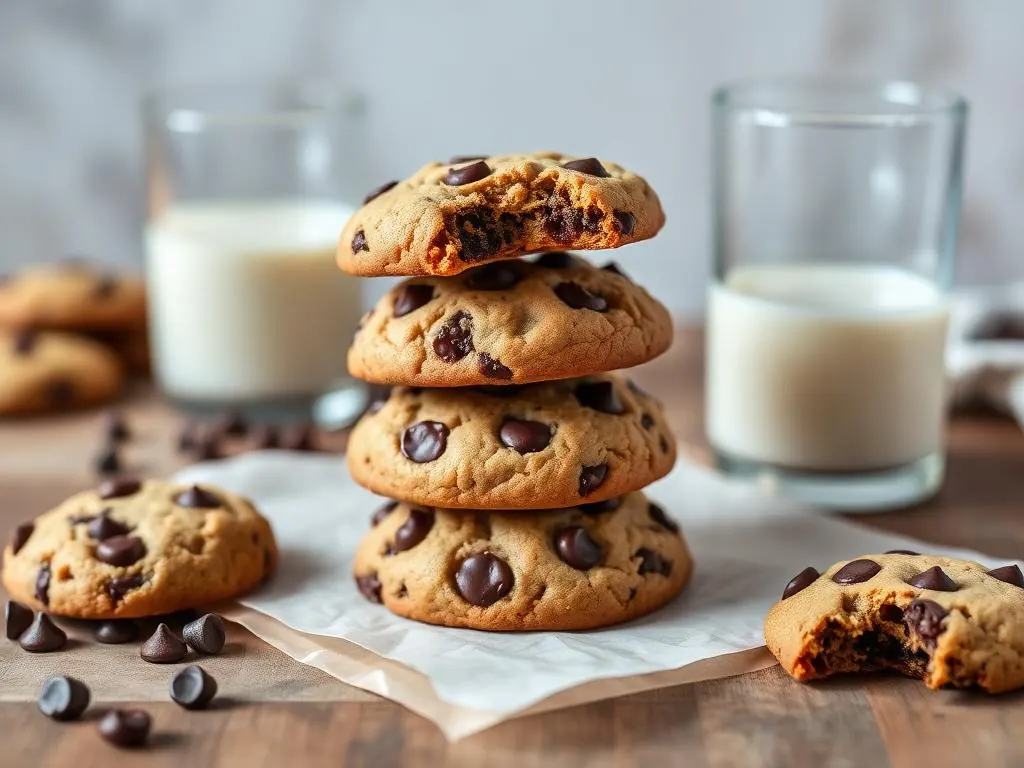
Stop searching for the best chocolate chip cookies. This recipe delivers a soft, chewy texture with buttery edges and gooey chocolate in every bite — the ultimate homemade cookie experience.
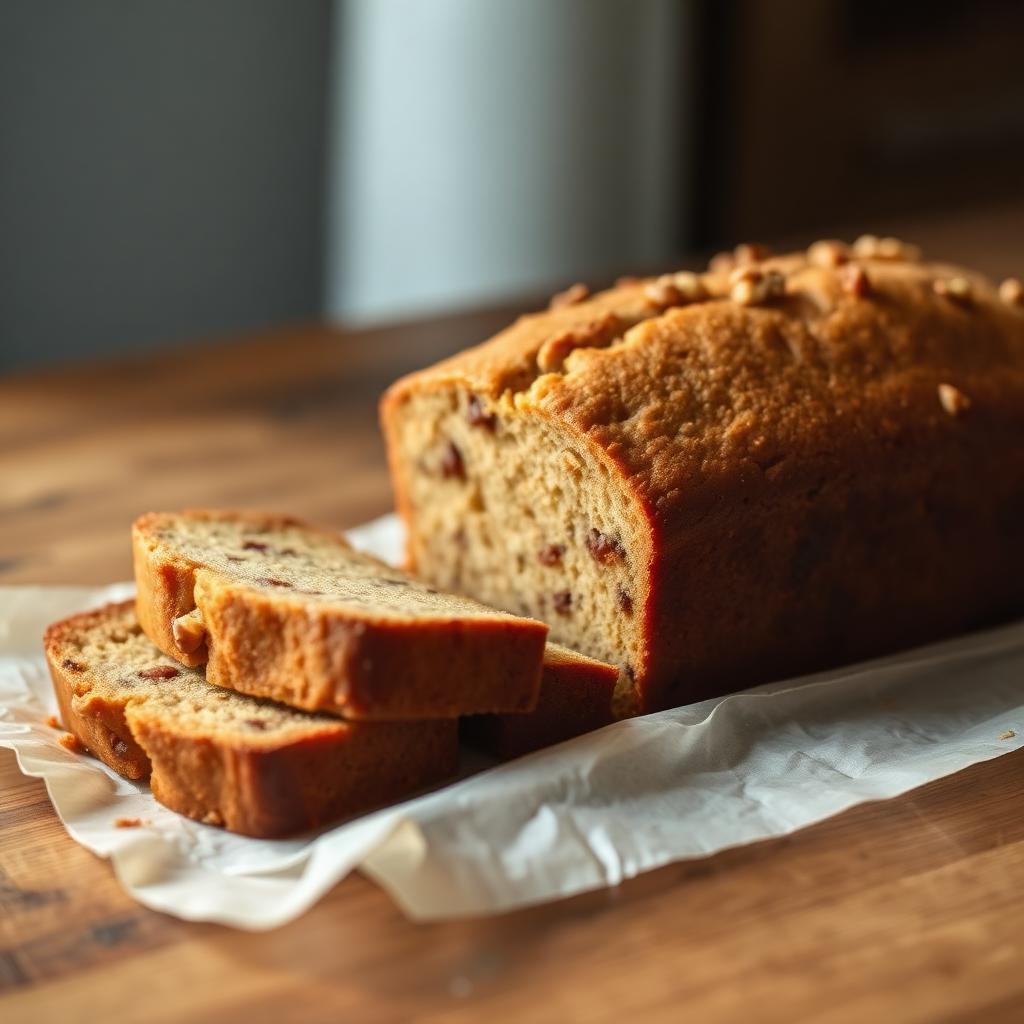
The Best Moist Banana Bread
Discover how to make the best moist banana bread using only one bowl. This homemade banana bread recipe delivers a soft, bakery-style loaf that is perfect for utilizing overripe bananas.
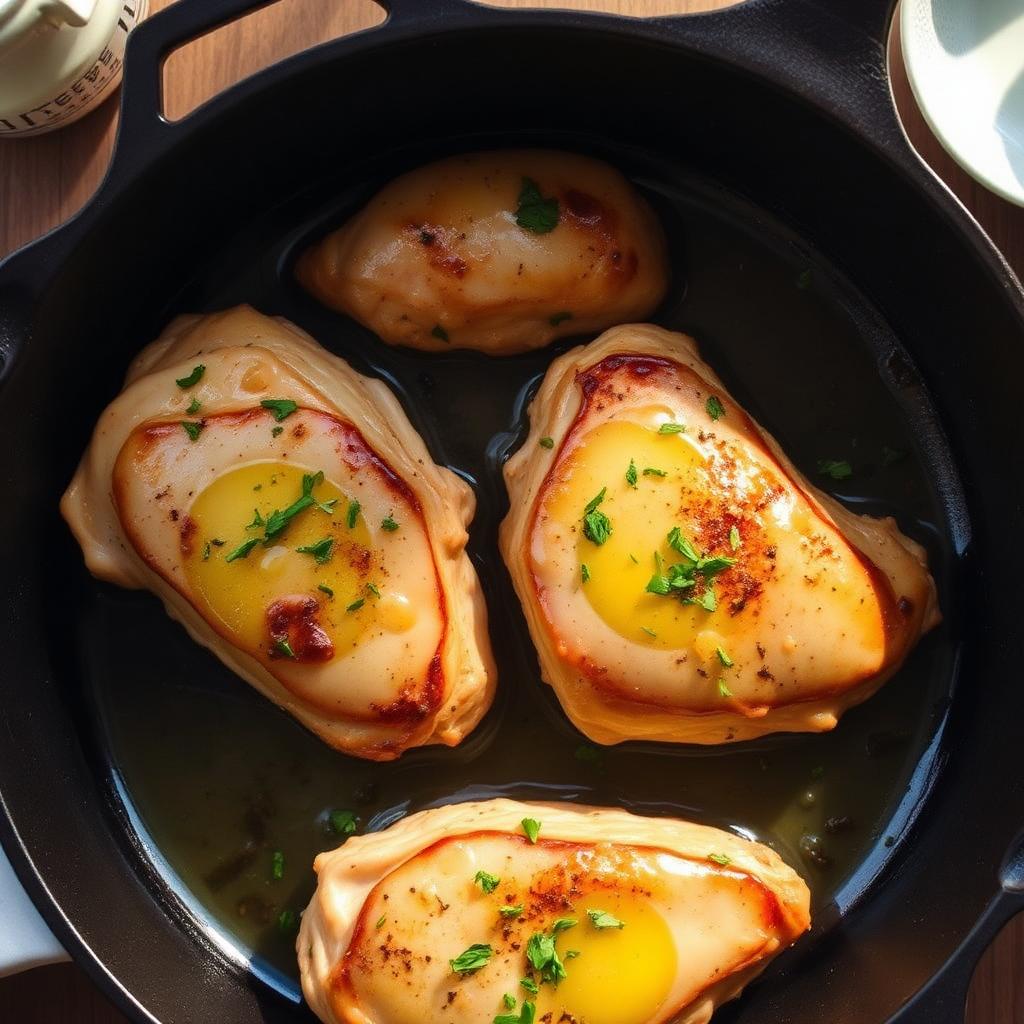
Garlic Butter Chicken
Our 20-minute garlic butter chicken is a restaurant-style meal you can make in one skillet. This easy chicken recipe uses simple ingredients to create a rich, savory pan sauce.
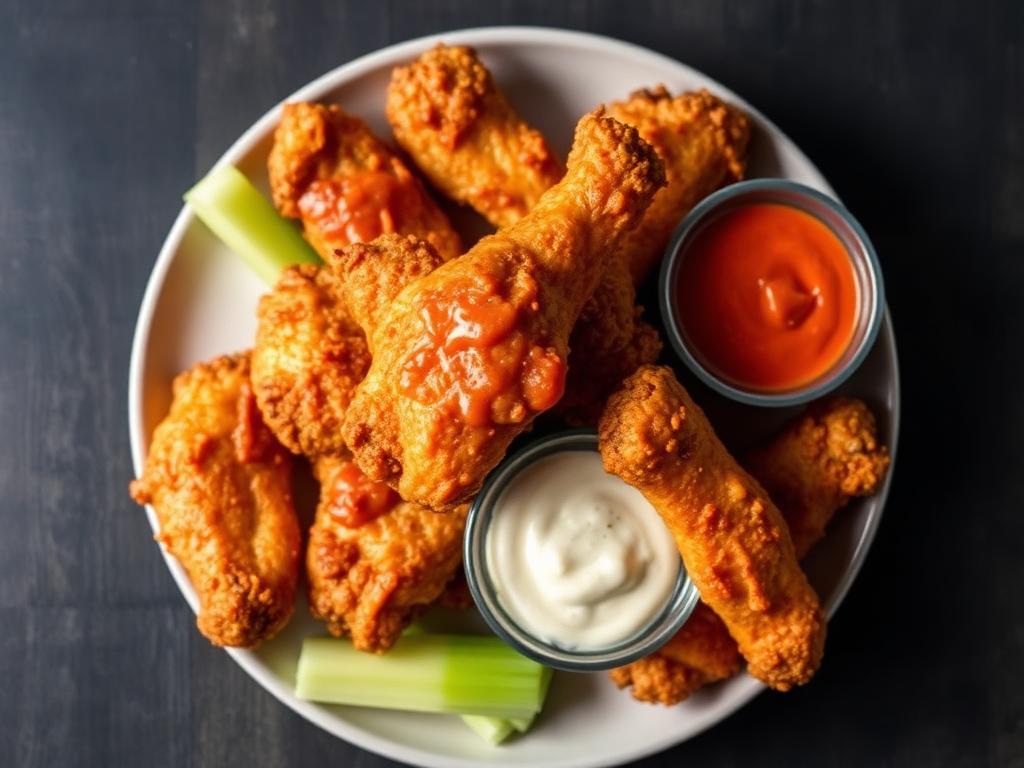
Crispy Air Fryer Chicken Wings
Stop settling for soggy wings and try these air fryer chicken wings. These crispy wings use no flour or breading, making them the perfect keto chicken wings for your next party.